

“History is not the Province of the Ladies” Yeah, Right.
On the 250th anniversary of the Declaration of Independence, two women who helped shape America deserve to finally be remembered – one with her name carved in stone.

There are 56 signers of the Declaration of Independence. Their names are immortalized on 56 granite blocks located on a small island in the middle of a lake on the National Mall in Washington, D.C. I visited the memorial over the weekend and let’s just say it could use some TLC - and a major addition. The memorial was dedicated on July 4, 1984, exactly 208 years after Congress voted to approve the document. It is known as the Signers Memorial, but it is incomplete.
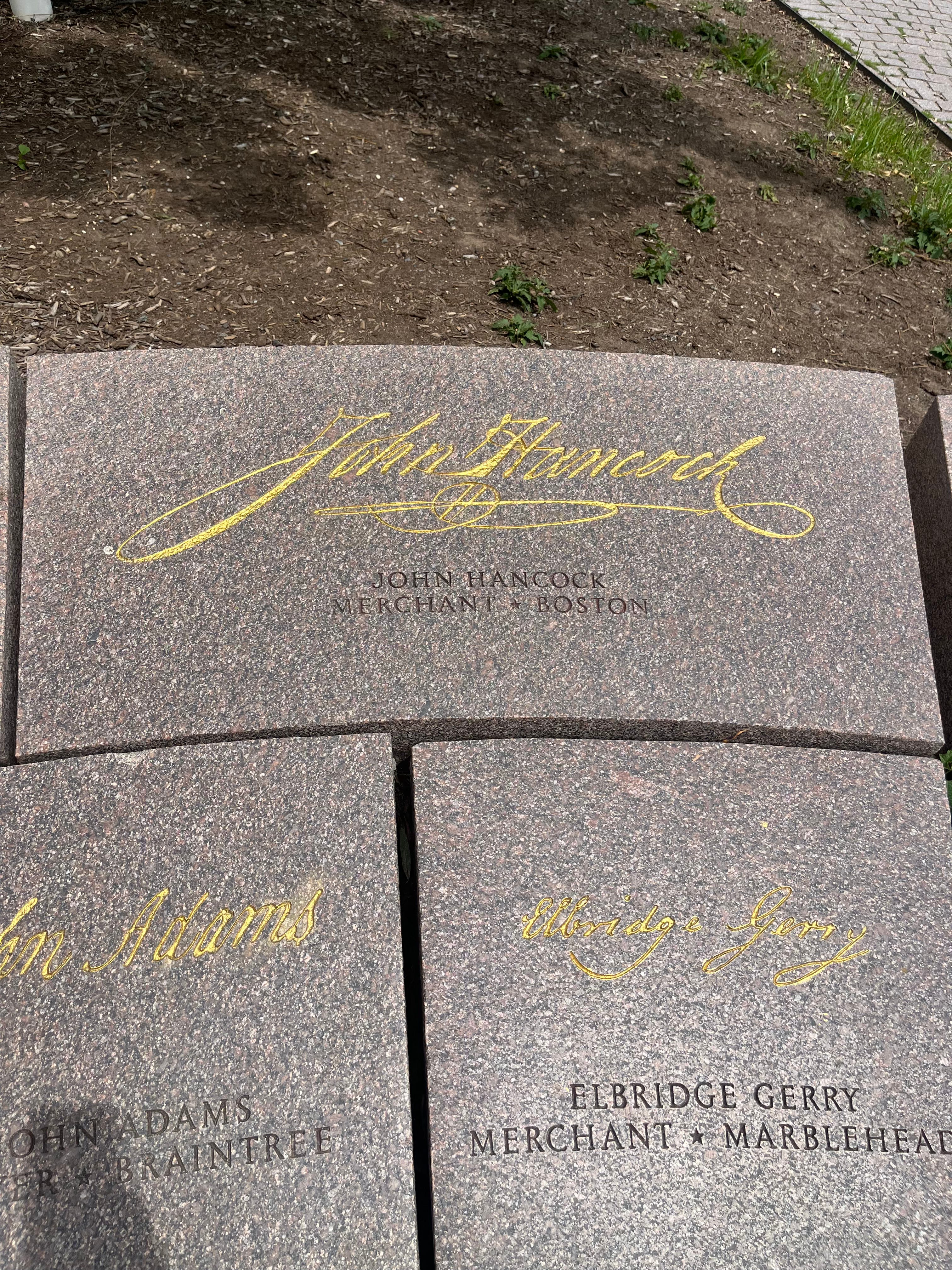
Fifty-five of those signers were men. John Hancock. Benjamin Franklin. Thomas Jefferson. You know their names.
But there is one more name on the Declaration of Independence that doesn’t appear on those granite blocks. A name set in bold type at the very bottom of the most important document in American history. A name that belongs to a woman.
That name is Mary Katherine Goddard — and this July 4th, as America celebrates its 250th birthday, most people still have no idea who she is.
She was one of the dozens of women who Norah O’Donnell and I write about in We the Women: The Hidden Heroes Who Shaped America. We want to celebrate women who have been supporting players – or forgotten altogether - on the 250th anniversary of American independence.
Over the course of the three years we worked on the book I can’t tell you how many times Norah and I looked at each other and said in disbelief, “I’ve never heard of her before.” There are many reasons for this, one of them is that history has been written by a handful of white male intellectuals, the other is that women have largely been told not to seek praise. Do not brag, or appear as if you’re bragging. If they didn’t write it down, then they couldn’t count on someone else doing it for them.
Even when they did make a point of signing their name to their work it was somehow erased – at least in the history books. Take a close look at the bottom of the Declaration of Independence and you’ll see what I mean.
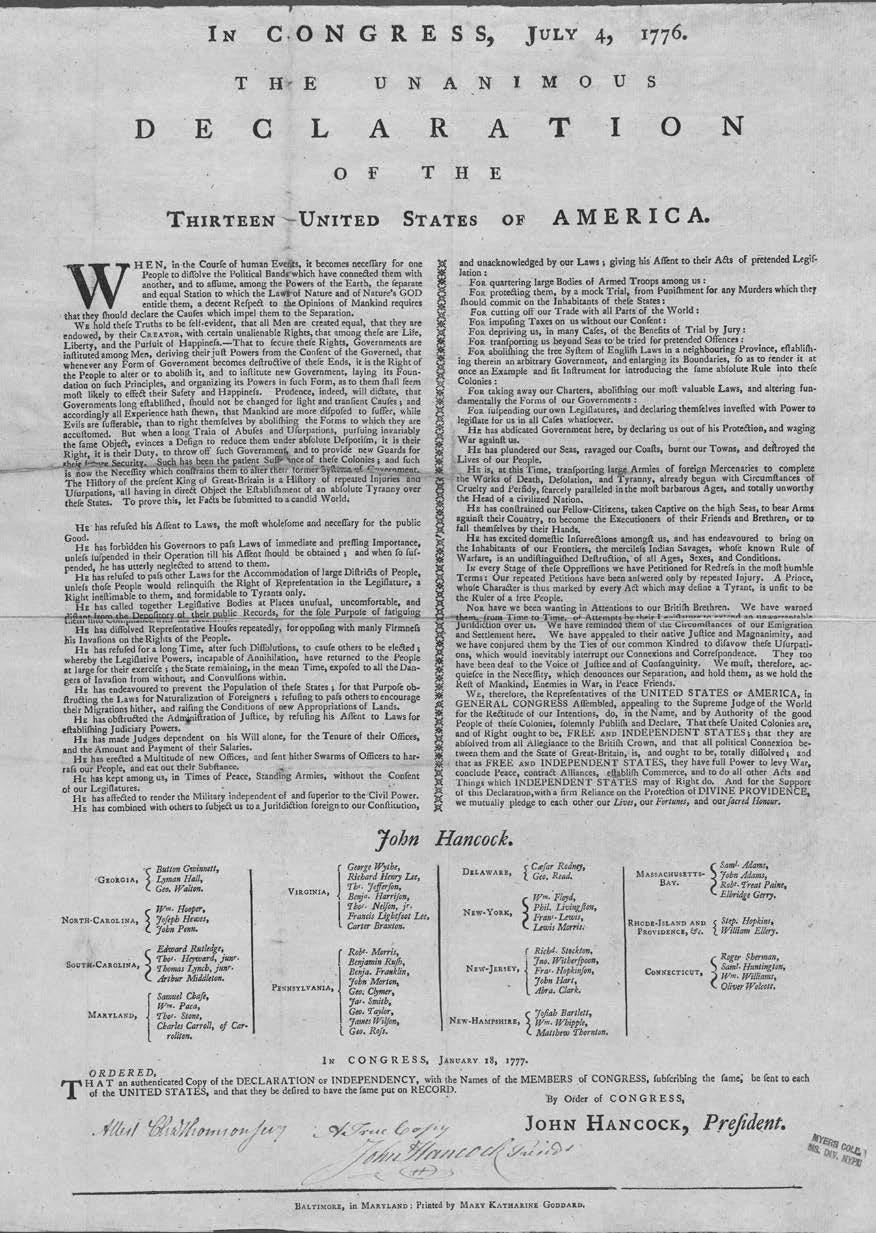
See the bottom the page: “Baltimore, Maryland: Printed by Mary Katharine Goddard”
The Printer
On January 18, 1777, the Second Continental Congress ordered the printing of an authenticated copy of the Declaration, with the names of all the signers, to be distributed to each of the thirteen colonies. The lawmakers were meeting in Baltimore — they’d fled Philadelphia as British troops closed in. Mary Katherine Goddard’s printing shop was just blocks away. Congress called on her.
She completed the job in two weeks.
This was no small task. Earlier versions of the Declaration had circulated without signers’ names, to avoid British detection. Printing a version with 55 names was an act of open defiance — and anyone whose name appeared on it risked imprisonment or worse. Fellow signer Richard Stockton of New Jersey had already been captured by the British and jailed under “harsh conditions” for exactly that.
Mary Katherine knew all of this. And at the bottom of the page, beneath John Hancock’s famous signature, she printed her full name — Mary Katharine Goddard — in bold type. She could have used her initials, as she had on her newspapers. She chose not to. It was one of the most deliberate acts of courage in the founding of this country, and almost nobody knows about it.
Today her work is known as the Goddard Broadside. Only a handful of copies survive, including ones at the New York Public Library and the Library of Congress. It was the first printed version of the Declaration specifically intended for preservation — the first to carry the full title “The Unanimous Declaration of the Thirteen United States of America.”
She helped birth a nation. Her name is on the document that proves it.
Printer, Publisher, Postmaster
Her story, even before this act of courageous defiance, was remarkable. Mary Katherine was one of the most prominent publishers of the Revolutionary era. She ran the Maryland Journal and Baltimore Advertiser, devoted pages to Thomas Paine’s Common Sense, and wrote her own editorials — calling out British “savage barbarity,” urging colonists to resist, declaring after Lexington and Concord that “Americans would rather die than live [as] slaves.”
In 1775, she was appointed Postmaster of Baltimore by none other than Benjamin Franklin — making her the first female postmaster in the United States. She served for fourteen years, often paying the mail carriers out of her own pocket to keep communications running during the war. In a time when letters were the only form of long-distance communication, she was the person who kept the country talking to itself.
Then, in 1789, she was fired. The new Postmaster General gave her job to a man who, in her own words, had “never had a Day’s previous knowledge of the duties he undertakes.” The reason? The role required travel that was “more than a Woman could undertake.”
Over 230 Baltimore citizens — including the governor of Maryland — signed a petition demanding her reinstatement. Mary Katherine wrote directly to President George Washington, calling her dismissal an “extraordinary Act of oppression” and protesting that she had been treated as “an unfriendly delinquent, unworthy of common Civility, as well as common Justice.” Historians believe this may be the first time a woman used the word oppression in a political context in America.
Washington’s response? Dismissive. The Senate never even replied.
She never got her job back.
She deserves better – and there is something we can do about it.
She Belongs on That Memorial
Walk across that wooden bridge to the island in the National Mall. Look at the 56 granite blocks. Read the names. Then think about the woman whose name also appears on the document those men signed — the woman who printed it, who distributed it, who signed her own name to it knowing the British could come for her.
Mary Katherine Goddard should have a 57th block.
She never married. She never had children. She devoted her life to her country, and her country repaid her with dismissal, silence, and centuries of forgetting. On the 250th anniversary of the document she risked her life to print, the least we can do is say her name.
“History is not the Province of the Ladies”
John Adams said this in 1805. He was furious. He was also, not coincidentally, talking about a woman.
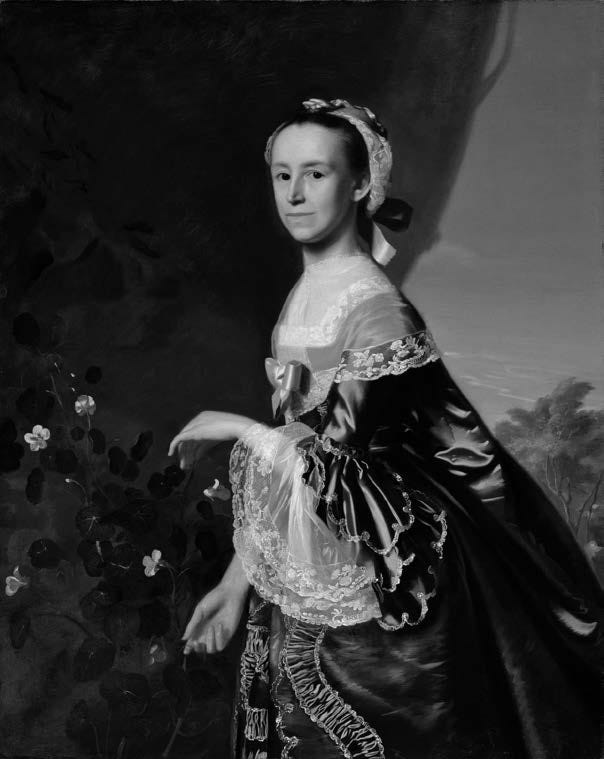
Her name was Mercy Otis Warren — poet, playwright, pamphleteer, political satirist, and the woman Adams had once called “the most accomplished Lady in America.” He changed his tune after she published her three-volume History of the Rise, Progress and Termination of the American Revolution — a work she had spent thirty years writing, which included a rather candid assessment of Adams himself.
She described him as having a “partiality for monarchy” and as a man whose “prejudices and passions were sometimes too strong for his sagacity and judgment.”
Adams was not pleased. “History is not the Province of the Ladies,” he declared.
Mercy’s response, essentially: Write your own book, then.
The First Lady of the American Revolution
Mercy Otis Warren was born in 1728 in Barnstable, Massachusetts. At age nine, she argued her way into sitting in on her brother’s school lessons — a remarkable act of self-determination for a girl of her era. While most women of her class learned only to read, Mercy received a full education in history, classical literature, and mythology.
In 1754, she married James Warren, a Massachusetts politician, and together they became one of the great political power couples of the Revolution. Their Plymouth home was a gathering place for Boston radicals — including George Washington — who met to plan resistance against the British. James actively encouraged his wife’s writing, calling it her “Masculine Genius,” which tells you everything you need to know about 18th-century backhanded compliments.
Mercy published for years under pen names like “A Lady from Massachusetts” — because that’s what women had to do. Her first play, The Adulateur (1772), was a savage political satire targeting the loyalist governor Thomas Hutchinson. After the Boston Tea Party, John Adams personally asked her to write a poem about it. Her response, “The Squabble of the Sea Nymphs,” was such a sharp takedown of British loyalists that we might call it, in today’s terms, a diss track aimed at King George III.
Thomas Jefferson praised her “high station in the ranks of genius.” Alexander Hamilton, after receiving her book of poetry, wrote that her work made clear that “female genius in the United States has outstripped the Male.”
She was known then, but she is largely forgotten today.
The Secret Muse of the Bill of Rights
Here is the part of Mercy’s story that should be taught in every American history class.
When the proposed Constitution came up for ratification in 1787–1788, Mercy was alarmed. As a staunch Anti-Federalist, she believed a powerful central government was a betrayal of everything the Revolution stood for. She published an anonymous pamphlet — “Observations on the New Constitution” — arguing that the document was dangerous because it offered no explicit protections for individual liberties. No free press. No freedom of conscience. No trial by jury. No protection against officials who could “enter our houses, search, insult, and seize at pleasure.”
That pamphlet circulated in 1,700 copies in New York alone — nearly four times the reach of The Federalist Papers.
When Massachusetts ratified the Constitution, Governor John Hancock sent proposed amendments — many of them Mercy’s ideas. Her insistence on written protections for individual rights became the model for the Bill of Rights, earning her the title “the secret muse of the Bill of Rights.”
In 1790, she became one of the first American women to publish political works under her own name.
The woman who wrote the blueprint for the first ten amendments to the Constitution was not James Madison. It was Mercy Otis Warren — a woman who couldn’t vote, who published for years without using her own name, who was told by the future president of the United States that history was not her province.
She died in 1814 at age eighty-six, mentally sharp until the end, still engaged with the country she had helped create.
Two Women. One Anniversary. 250 Years of Forgetting.
This July 4th, America turns 250. There will be fireworks and parades and speeches about freedom and founding and the great American experiment.
But here’s what I keep thinking about: the woman who printed the Declaration, who signed her own name to it knowing the British could arrest her, never got her place in the monument to the signers. And the woman whose ideas shaped the Bill of Rights — the very document that defines American liberty — was told by John Adams that history wasn’t hers to write.
They wrote it anyway. They built it anyway. They risked everything anyway.
Mary Katherine Goddard’s name is on the founding document of this nation. That’s not a footnote. That’s history.
And Mercy Otis Warren? She proved definitively that history was, indeed, the province of this lady.